Shading and light
One light source, avoid banding, and dither on purpose.
Pick a single light direction (top-left is a safe default) and commit to it for the whole sprite. Surfaces facing the light get your lighter values; surfaces facing away get your darker values. Consistency of light is what makes a flat grid of pixels read as a 3D form.
Avoid banding
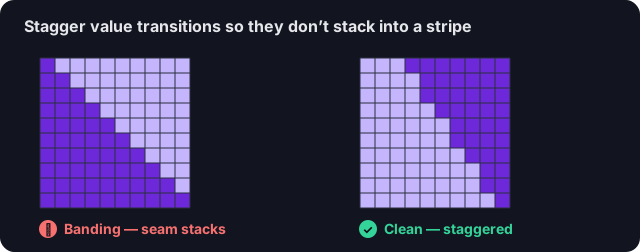
Banding happens when two shades run parallel along the same stair-step, creating an ugly stripe that flattens the form. Break banding by staggering where your value transitions happen instead of stacking them on the same diagonal.
Dithering
Shade this ball with one light source (top-left).
Light color where the light hits (top-left), shadow color opposite it, mid color between. The faint guide shows the target — match it to pass.
Match 85% to pass · now at 0%
Dithering is alternating two colors in a checker or scatter pattern to fake a third shade or a gradient without adding a new color. Use it sparingly and intentionally — for texture, gradients, or old-console vibes. Over-dithering looks noisy.
What is "banding" in pixel shading?